Same Day Emergency Appointments Available

What Are The Symptoms Of Tarsal Tunnel Syndrome?

If the nerves are affected in the ankle, foot and toes, you may have a condition that is known as tarsal tunnel syndrome. Some of the symptoms that are associated with this ailment can include numbness, or a burning and tingling sensation. If an injury has occurred, and the tissues surrounding the tibial nerve become inflamed, this condition may develop. The pain and discomfort is typically felt in the heel and may extend to the sole of the foot. There are a number of reasons why this ailment can occur. These often include stress fractures, being overweight, or having flat feet. There may be existing conditions that put pressure on the nerves within the tarsal tunnel, and this may cause inflammation to occur. If you have any of the symptoms that have been mentioned, it is suggested to speak to a podiatrist who can guide you toward proper treatment options.

Tarsal tunnel syndrome can be very uncomfortable to live with. If you are experiencing tarsal tunnel syndrome, contact one of our podiatrists of Farah Podiatry Associates. Our doctors can provide the care you need to keep you pain-free and on your feet.

Tarsal Tunnel Syndrome

Tarsal tunnel syndrome, which can also be called tibial nerve dysfunction, is an uncommon condition of misfiring peripheral nerves in the foot. The tibial nerve is the peripheral nerve in the leg responsible for sensation and movement of the foot and calf muscles. In tarsal tunnel syndrome, the tibial nerve is damaged, causing problems with movement and feeling in the foot of the affected leg.

Common Cause of Tarsal Tunnel Syndrome

  • Involves pressure or an injury, direct pressure on the tibial nerve for an extended period of time, sometimes caused by other body structures close by or near the knee.
  • Diseases that damage nerves, including diabetes, may cause tarsal tunnel syndrome.
  • At times, tarsal tunnel syndrome can appear without an obvious cause in some cases.

The Effects of Tarsal Tunnel Syndrome

  • Different sensations, an afflicted person may experience pain, tingling, burning or other unusual sensations in the foot of the affected leg.
  • The foot muscles, toes and ankle become weaker, and curling your toes or flexing your foot can become difficult.
  • If condition worsens, infections and ulcers may develop on the foot that is experiencing the syndrome.

A physical exam of the leg can help identify the presence of tarsal tunnel syndrome. Medical tests, such as a nerve biopsy, are also used to diagnose the condition. Patients may receive physical therapy and prescriptive medication. In extreme cases, some may require surgery.

If you have any questions please contact our office located in Trenton, MI . We offer the newest diagnostic and treatment technologies for all your foot and ankle needs.


Read more about Tarsal Tunnel Syndrome

Heel Pain Can Be Treated!

Do you suffer from heel pain when you get up in the morning? If so, you should seek professional help and have a proper diagnosis performed. Heel pain can be caused by several different foot-related conditions.

Swollen Feet Are Common During Pregnancy

Many pregnant women experience swollen and achy feet during their pregnancies. This is a result of the growing fetus, in addition to the body producing excess fluid. There are methods that can be implemented which can help to reduce discomfort in the feet that is often experienced during the latter stages of pregnancy. These include elevating your feet as often as possible throughout the day, limiting your sodium intake, and stretching the calf muscles and toes. Some women find it helpful to wear compression stockings, as these may be beneficial in controlling persistent swelling. If you would like additional information about how pregnancy can affect the feet, please consult with a podiatrist.

Pregnant women with swollen feet can be treated with a variety of different methods that are readily available. For more information about other cures for swollen feet during pregnancy, consult with one of our podiatrists from Farah Podiatry Associates. Our doctors will attend to all of your foot and ankle needs.

What Foot Problems Can Arise During Pregnancy?

One problem that can occur is overpronation, which occurs when the arch of the foot flattens and tends to roll inward.  This can cause pain and discomfort in your heels while you’re walking or even just standing up, trying to support your baby.  

Another problem is edema, or swelling in the extremities. This often affects the feet during pregnancy but tends to occur in the later stages. 

How Can I Keep My Feet Healthy During Pregnancy?

  • Wearing orthotics can provide extra support for the feet and help distribute weight evenly
  • Minimize the amount of time spent walking barefoot
  • Wear shoes with good arch support
  • Wear shoes that allow for good circulation to the feet
  • Elevate feet if you experience swelling
  • Massage your feet
  • Get regular, light exercise, such as walking, to promote blood circulation to the feet

If you have any questions, please feel free to contact our office located in Trenton, MI . We offer the newest diagnostic and treatment technologies for all your foot care needs.

Read more about Foot Care for Pregnant Women

Nerve Damage May Lead to Morton’s Neuroma

Pain and discomfort that is felt on the ball of the foot may indicate the presence of a condition that is known as Morton’s neuroma. Additionally, the pain may be felt at the base of the toes, and patients have noticed that it feels like they are standing on pebbles. Other symptoms can include numbness or tingling, and walking may be difficult. A common cause of this condition is wearing shoes that are too tight, and which do not have adequate room for the toes to move freely in. Wearing these types of shoes can cause irritation in the nerve, gradually putting pressure on that portion of the foot. There are existing medical conditions that are often associated with Morton’s neuroma. These can include bunions, hammertoes, and flat feet. After a proper diagnosis is performed, mild relief can be found in performing stretching techniques that may be helpful in loosening the tendons, in addition to elevating and massaging the affected foot. Please consult with a podiatrist if you feel you may have developed Morton’s neuroma, so that the proper treatment can begin.

Morton’s neuroma is a very uncomfortable condition to live with. If you think you have Morton’s neuroma, contact one of our podiatrists of Farah Podiatry Associates. Our doctors will attend to all of your foot care needs and answer any of your related questions.  

Morton’s Neuroma

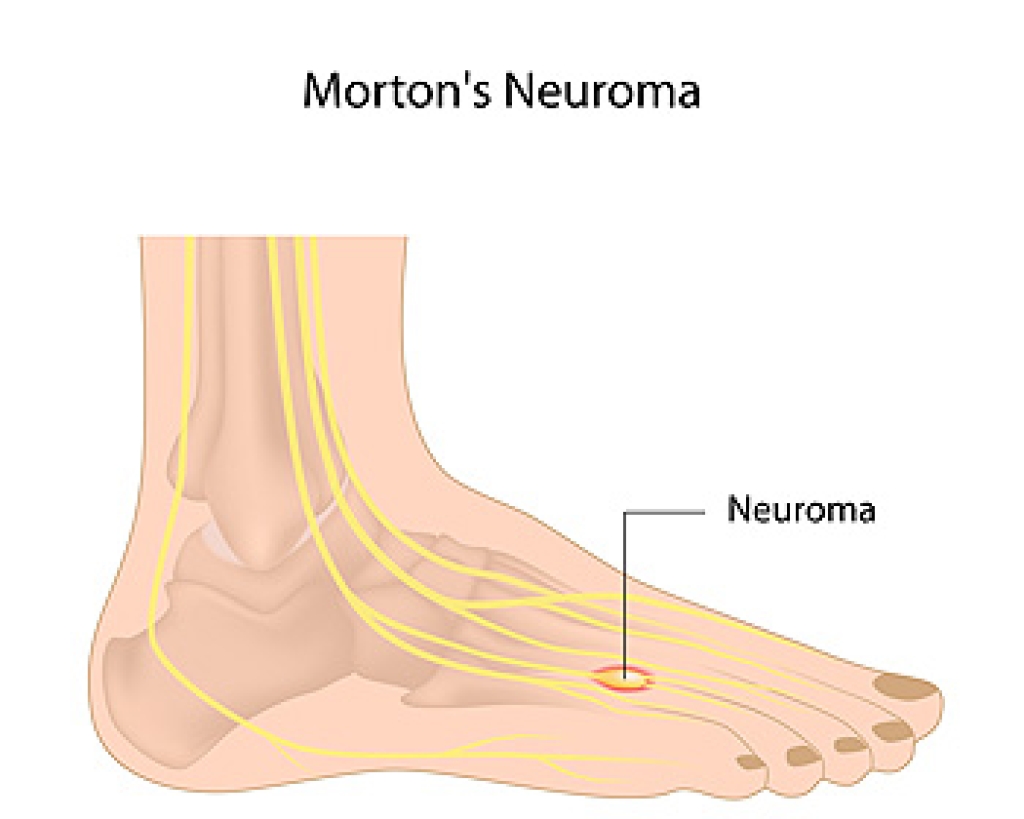
Morton's neuroma is a painful foot condition that commonly affects the areas between the second and third or third and fourth toe, although other areas of the foot are also susceptible. Morton’s neuroma is caused by an inflamed nerve in the foot that is being squeezed and aggravated by surrounding bones.

What Increases the Chances of Having Morton’s Neuroma?

  • Ill-fitting high heels or shoes that add pressure to the toe or foot
  • Jogging, running or any sport that involves constant impact to the foot
  • Flat feet, bunions, and any other foot deformities

Morton’s neuroma is a very treatable condition. Orthotics and shoe inserts can often be used to alleviate the pain on the forefront of the feet. In more severe cases, corticosteroids can also be prescribed. In order to figure out the best treatment for your neuroma, it’s recommended to seek the care of a podiatrist who can diagnose your condition and provide different treatment options.

If you have any questions, please feel free to contact our office located in Trenton, MI . We offer the newest diagnostic and treatment technologies for all your foot care needs.

Read more about Morton's Neuroma

Foot Ulcers and Diabetes

Patients with diabetes are often familiar with foot conditions that can develop as a result of this affliction. Research has indicated the importance of having regular foot examinations, as this can be helpful in noticing any cuts or wounds that have developed on the feet. Diabetes  can produce tingling and numbing sensations in the feet. This may cause difficulty in feeling any cuts that are present on the feet, which can lead to infections. If the cuts are not properly cared for, foot ulcers may develop and gangrene may gradually develop.  If you have diabetes, it is advised that you be under the care of a podiatrist who can manage this condition.

Diabetic foot care is important in preventing foot ailments such as ulcers. If you are suffering from diabetes or have any other concerns about your feet, contact one of our podiatrists from Farah Podiatry Associates. Our doctors can provide the care you need to keep you pain-free and on your feet.

Diabetic Foot Care

Diabetes affects millions of people every year. The condition can damage blood vessels in many parts of the body, especially the feet. Because of this, taking care of your feet is essential if you have diabetes, and having a podiatrist help monitor your foot health is highly recommended.

The Importance of Caring for Your Feet

  • Routinely inspect your feet for bruises or sores.
  • Wear socks that fit your feet comfortably.
  • Wear comfortable shoes that provide adequate support.

Patients with diabetes should have their doctor monitor their blood levels, as blood sugar levels play such a huge role in diabetic care. Monitoring these levels on a regular basis is highly advised.

It is always best to inform your healthcare professional of any concerns you may have regarding your feet, especially for diabetic patients. Early treatment and routine foot examinations are keys to maintaining proper health, especially because severe complications can arise if proper treatment is not applied.

If you have any questions, please feel free to contact our office located in Trenton, MI . We offer the newest diagnostic and treatment technologies for all your foot care needs.

Read more about How to Care for Diabetic Foot
scroll to top